PSLE Chinese Oral: Video Conversation Practice
27 October 2026 · Tutor Circle
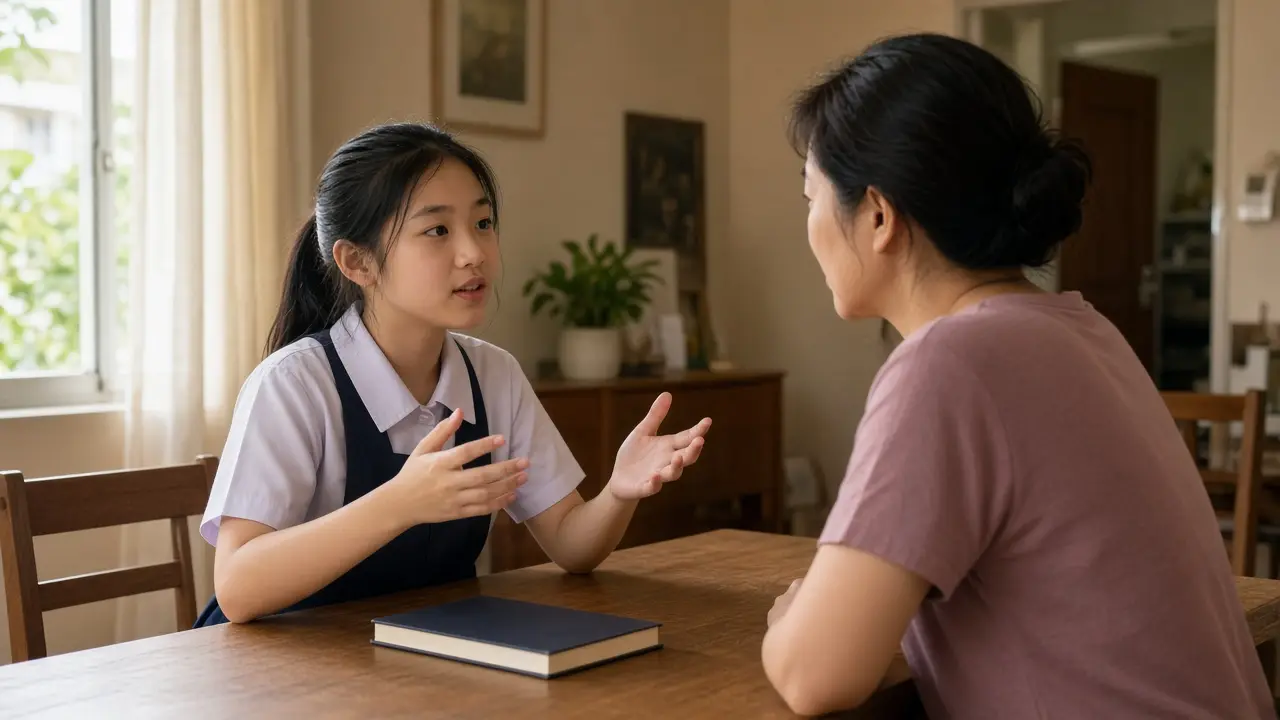
This page is in English so a parent can run the practice. The practice itself is in Chinese, because that is the exam. The formal oral uses a passage and a short video on a computer. A picture at the kitchen table is rehearsal. It is not the stimulus SEAB will play.
- Format
- E-oral since 2017, for standard and foundation Mother Tongue
- Two parts
- Read a passage aloud, then a conversation about a short video
- What the video is for
- A context for a view. Not a list of objects to name
- A stall
- Describing the scene, or reciting a speech, instead of answering
- Marks
- Standard and foundation weight the oral differently. Use the child’s paper
What parents need to know
From 2017, both standard and foundation Mother Tongue orals have been e-examinations. [1] The candidate prepares at a screen, then reads aloud and talks with the examiner. A 2026 Primary 6 briefing for Foundation Chinese describes about ten minutes at the computer beforehand, to read the passage silently and watch the video, and then the reading and the conversation inside the exam. [3] Timing and mark splits are not the same on every Chinese paper. Foundation Chinese gives the oral a heavier weight than many parents remember from standard Chinese. Read the paper your child sits. This page will not invent one mark scheme for both.
SEAB’s August 2026 reply is the part that changes home practice. The video is there so the child can notice something and say what they think. The child does not have to narrate the clip from start to finish, and does not have to name the objects in it. Needing an extra prompt from the examiner is not a penalty. The oral is not a test of expert knowledge, and a memorised paragraph is not what the examiners are listening for. [2]
Written Chinese, which is a different paper, is on the composition page. English oral, which uses a photograph rather than this video, is on the English oral page.
Where answers stall
| What you hear | What went wrong | A better next sentence |
|---|---|---|
| A list of what is on the table, the clothes, the window | The child is narrating objects. SEAB has said that is not required | 一句看法:我觉得他这样做是对的,因为…… |
| “他很好” and then silence | A view with no reason | 加上一个原因,原因要和短片里的事有关 |
| A long account of a holiday that never mentions the clip | Personal experience arrived before the question was answered | 先答问题,再加一个自己的例子 |
| A pause on a word for a tool in the clip | The child thinks the mark is the noun. The 2026 example was a crowbar | 用“那个工具”也可以。把句子说完 |
A practice dialogue
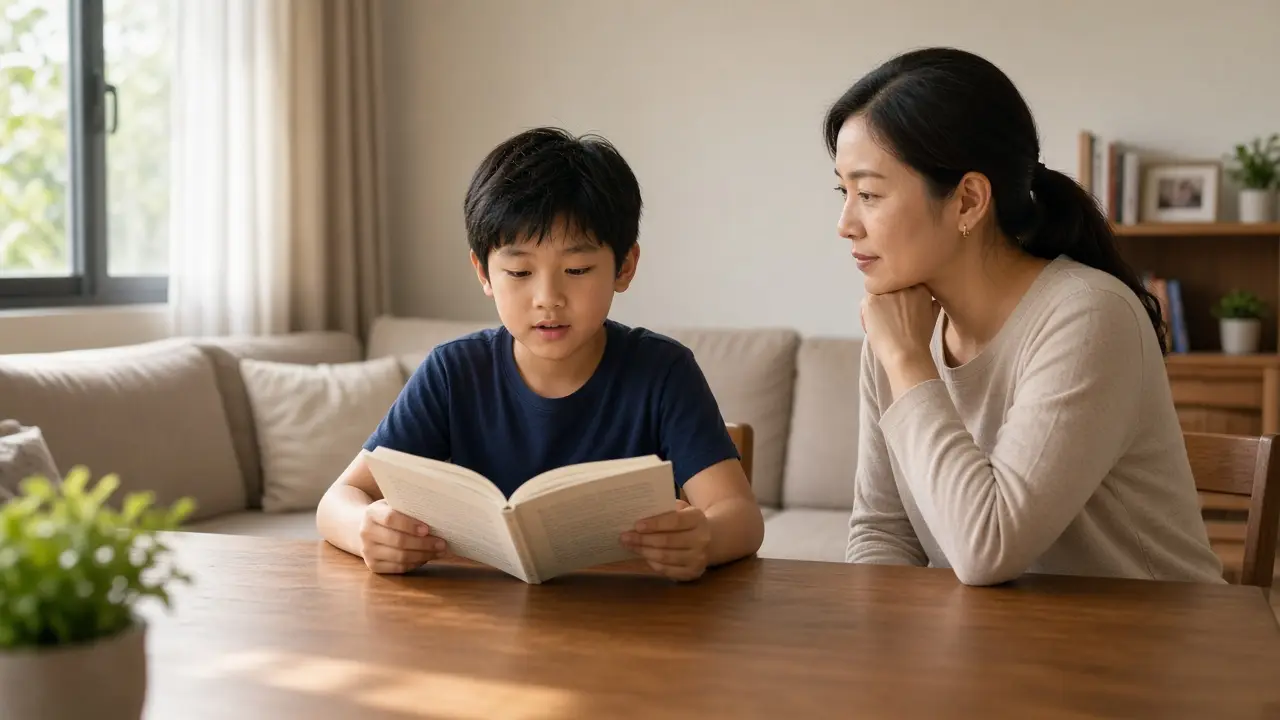
Original practice. Not an exam question, and not a script to memorise. The scene is: in a classroom, one pupil finishes a drink and leaves the bottle on the floor. Another pupil picks it up and puts it in the bin. A narration would point at the theme of looking after the place you share.
朗读,给家长听停顿
下课了,小明把瓶子放在地上,就跑去玩耍。小芳看见了,把瓶子捡起来,放进垃圾桶。她没有骂小明。老师后来请同学们记住,用过的东西要放好。
Listen once. You are listening for a pause at the full stop, and for whether the reading keeps moving. You are not expected to judge the tone of every character. If a character is skipped, mark that one character and read the sentence again. Guessing three different pronunciations for the same word is what a recording will catch.
会话
问:你觉得小芳捡瓶子,做得对吗?为什么?
答:我觉得她做得对。瓶子在地上,别人可能会踢到。她没有骂小明,只是把瓶子放进垃圾桶,这样比较有礼貌。
问:如果你看到同样的情况,你会怎么做?
答:我会先把瓶子捡起来。如果那个人是我的朋友,我会轻轻提醒他,下次放进垃圾桶。上个学期在食堂,我也这样提醒过我的弟弟。
The first answer gives a view and a reason tied to the scene. The second answers “what would you do” before it adds a personal example. A child who starts with the canteen story, and never says they would pick the bottle up, has not answered the question. Ask the question again. Do not supply the Chinese for them if the aim of the session is to hear their own sentence.
A self-check
Record one reading and one answer. Play it once. Tick what you can hear without speaking Chinese. Leave the language ticks for someone who can.
- The reading reached the full stops. It did not run to the end of the line and keep going.
- The first sentence answered the question that was asked.
- There is one reason, and the reason is about this scene.
- Any personal example comes after that, and it is the same kind of situation.
- The answer stops. It does not become a speech about a value in general.
- A missing noun did not end the answer. The child finished the sentence another way.
Three sessions a week, ten minutes each, is enough from June of the PSLE year. Earlier than that, this check once a fortnight keeps the format familiar. If the recordings show the same stall for three weeks, a Chinese tutor who will run the conversation, not a stack of model essays, is the booking to make. Say “PSLE Chinese oral, video conversation” on the request. Written composition is a different job, on the composition page.
Questions parents ask
Is PSLE Chinese oral a picture conversation or a video?
The formal oral is an e-oral. The candidate prepares at a computer, reads a passage, and holds a conversation about a short video. A printed picture is useful practice at home. It is not the exam stimulus. Confirm the year’s format on SEAB’s PSLE formats page, because Foundation Chinese and standard Chinese do not carry the same mark weight.
Does my child have to describe everything in the video?
No. SEAB said in August 2026 that the video gives a context for observations and viewpoints. Candidates are not asked to narrate the sequence or to name objects in the clip, and they are not marked down for missing a technical word. In that year’s oral, not naming a crowbar was given as the example.
What should a good answer contain?
A response to the question that was asked, one reason, and, when the question invites it, one example from the child’s own life that is actually about the same situation. A memorised speech about the environment, attached to a video about something else, does not answer the question.
Can parents practise this if they do not speak Chinese?
Parents can run the English checklist: did the child answer the question first, give a reason, and stop. They usually cannot judge tones, or whether a word was the wrong word. That listening is what a Chinese oral tutor is for, in a short block of sessions rather than a year of composition.
Are the sample lines on this page from the exam?
No. The passage, the scene and the dialogue were written for practice. SEAB does not release a script to memorise. A child who recites this page in the exam will be answering a different video.
Sources
- Singapore Examinations and Assessment Board, PSLE formats examined in 2026. From 2017, the oral examination for both standard and foundation Mother Tongue Languages is conducted as an e-examination. Accessed 27 October 2026. https://www.seab.gov.sg/psle/psle-formats-examined-in-2026/
- Singapore Examinations and Assessment Board, media reply, 21 August 2026. The video stimulus in the PSLE Chinese Language oral gives context for observations and viewpoints. Candidates do not have to narrate the action or name objects. Examiners may give extra prompts, and candidates are not penalised for needing them. The oral is not a test of specialist knowledge or of a memorised answer. Accessed 27 October 2026. https://www.seab.gov.sg/newsroom/21-august-2026-media-replies-2026/
- Yuhua Primary School, 2026 Primary 6 Chinese briefing. For Foundation Chinese, the school describes about 10 minutes of preparation at a computer, silent reading plus a video, then reading aloud and a conversation in the exam. Mark weights differ for standard Chinese. Use this as a picture of the e-oral procedure, and use SEAB plus the child’s own paper for the marks. Accessed 27 October 2026. https://www.yuhuapri.moe.edu.sg/files/2026_P6_Parent_Engagement_CL_revised.pdf