PSLE English Oral: Reading Aloud and Stimulus-Based Conversation
13 October 2026 · Tutor Circle
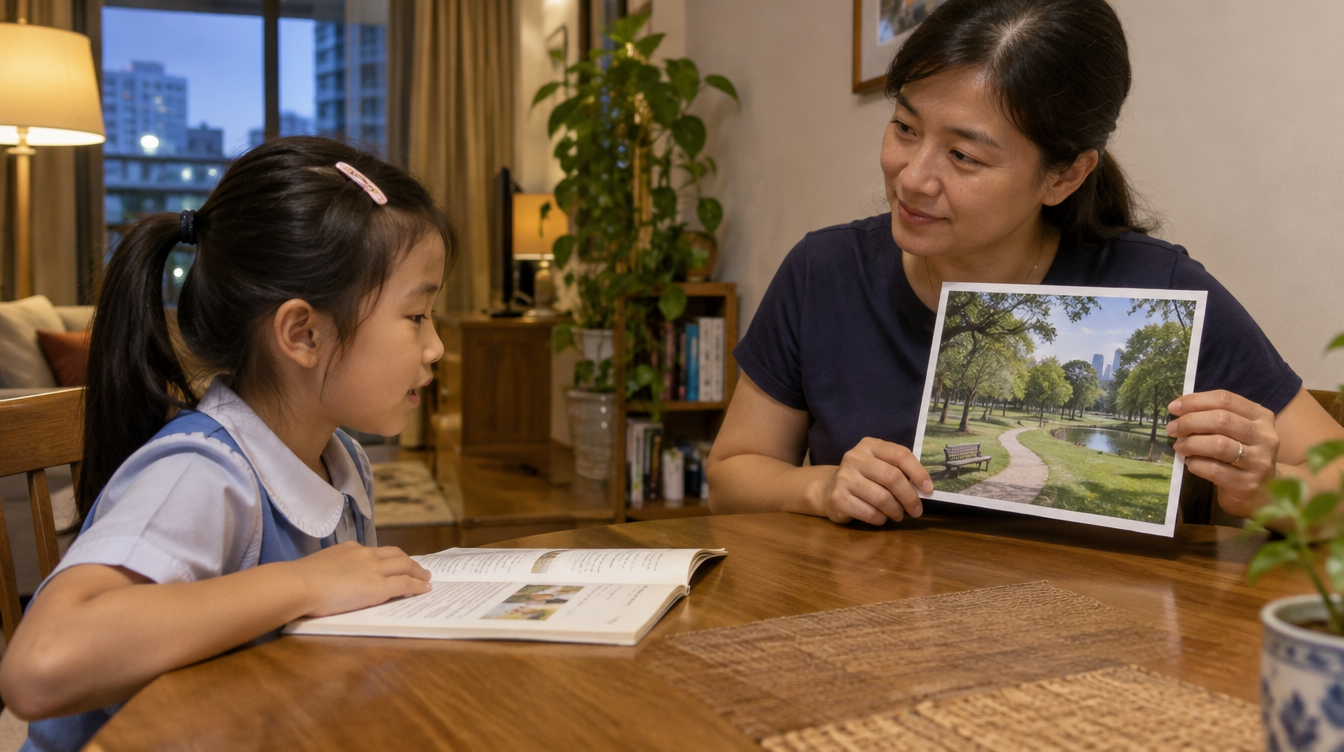
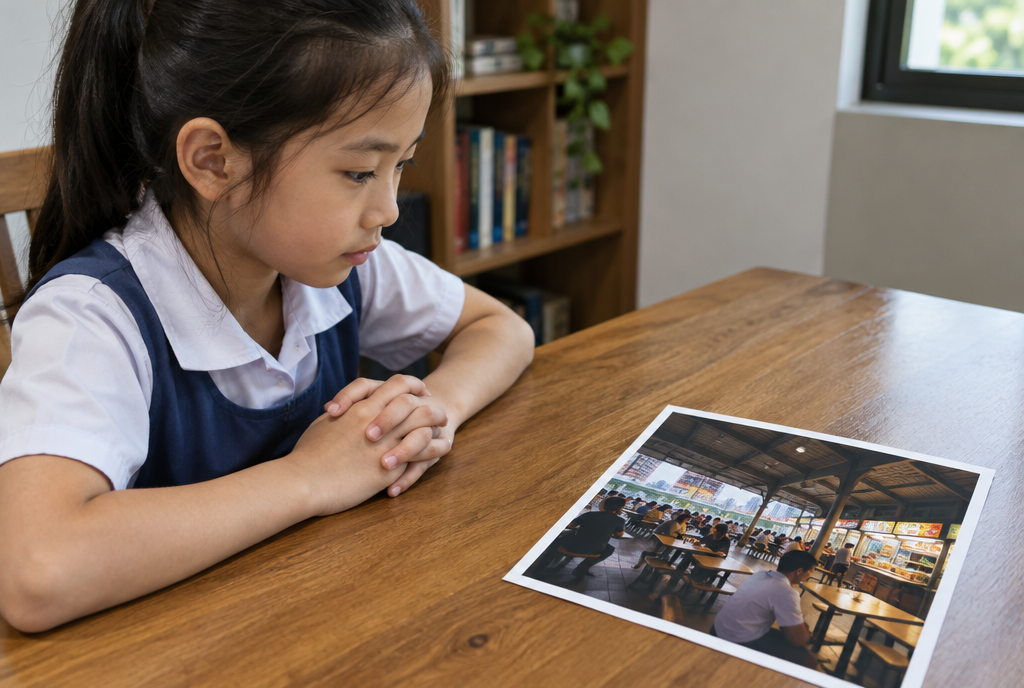
PSLE English oral is Paper 4, 40 marks, a fifth of the English score. The pupil reads a passage aloud, then talks about a picture they have not seen before. About five minutes of preparation, then about ten minutes with the examiners. Children who “speak fine at home” still lose this paper, because the conversation has a shape and the reading has to be heard across a table.
- Paper
- Paper 4, Oral Communication, 40 marks, 20% of English
- Part 1
- Reading aloud, an unseen passage
- Part 2
- Stimulus-based conversation, from a picture to the child’s own experience
- Time
- About 5 minutes to prepare, then about 10 minutes
- When
- August in recent years. 2027 dates are not published
- Home practice
- 10 minutes, three times a week, on a passage the child has not rehearsed
The two parts
Both parts use materials the pupil sees only in the preparation time. There is no prescribed text to memorise across the year. That is why a child who has “done oral” on the same three passages since March can still stall in August. [1]
| Part | What the pupil is given | What is heard |
|---|---|---|
| Reading aloud | An unseen passage | Pronunciation, pacing, and whether the full stops are observed |
| Stimulus-based conversation | A photograph or picture, then the examiners’ questions | A response that moves off the picture into a reason and an example |
Share of PSLE English
The written half of the “speaking and writing” worry is on the composition and situational writing page. The August oral date and the September written dates live on different weeks. Once SEAB publishes 2027, both belong on the school calendar. The 2026 written window was 24 to 30 September. [2]
Reading aloud
Hear the full stops
- The pupil should be audible to someone sitting across a table, not to someone beside them. Kitchen practice with the listener in the next chair hides a quiet voice.
- Pause at the full stop. A child who reads to the end of the line, rather than the end of the sentence, sounds fluent and is hard to follow.
- Mark three words they do not know and say them once before the timed read. Guessing a proper name three different ways is what the recording will catch.
- One new passage each practice. A polished passage teaches performance. A fresh passage teaches the exam.
The conversation
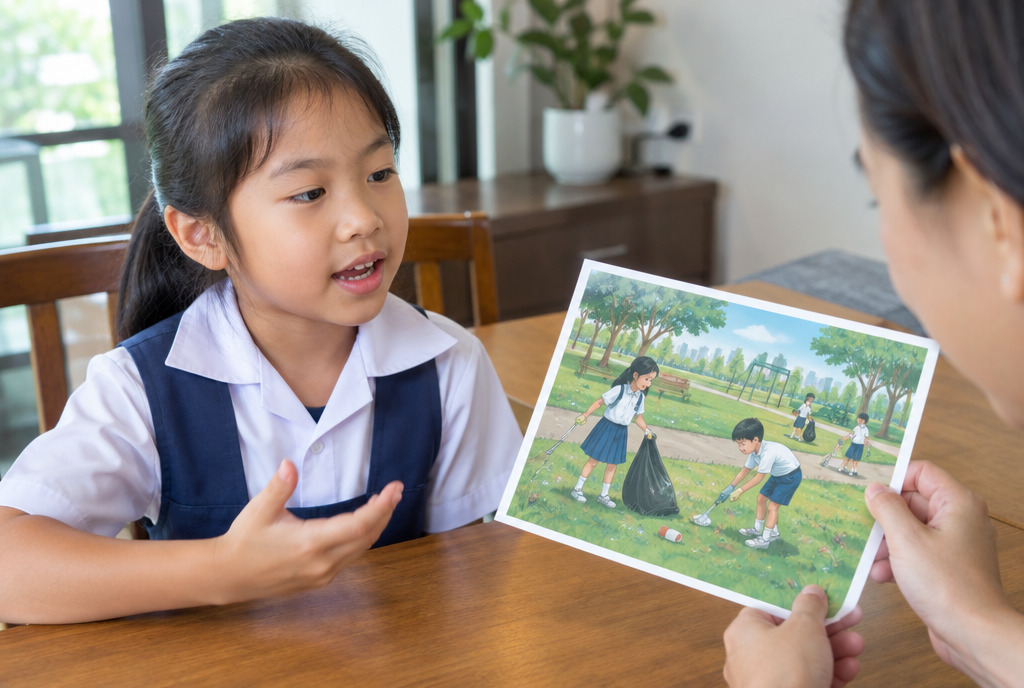
Examiners start at the picture and then leave it. A useful practice shape, which matches that movement, is three beats. It is a way to rehearse. It is not a script, and saying the words “firstly, secondly” does not earn a mark.
| Beat | A prompt a parent can ask | A thin answer, and a better one |
|---|---|---|
| The picture | What is happening here? | “People are cleaning.” Better: “Two pupils are picking up litter beside a bin, and one is holding a bag that is already full.” |
| Your experience | Have you done something like this? | “Yes, at school.” Better: “Last term our class cleared the canteen after recess because the bins were overflowing on Wednesday.” |
| A reason | Should every class do this? Why? | “Yes, because it is good.” Better: “Yes, for a month, because the canteen only stayed clean on the days a class was rostered.” |
The better answers are specific and stop. A two-minute speech that never mentions the picture has left the stimulus behind. If the child dries up, the parent’s only job is one follow-up: “Why?” or “When?”.
A 15-minute week
- Monday and Thursday: one paragraph, read three times, third time recorded. Listen once. Note one word and one pause.
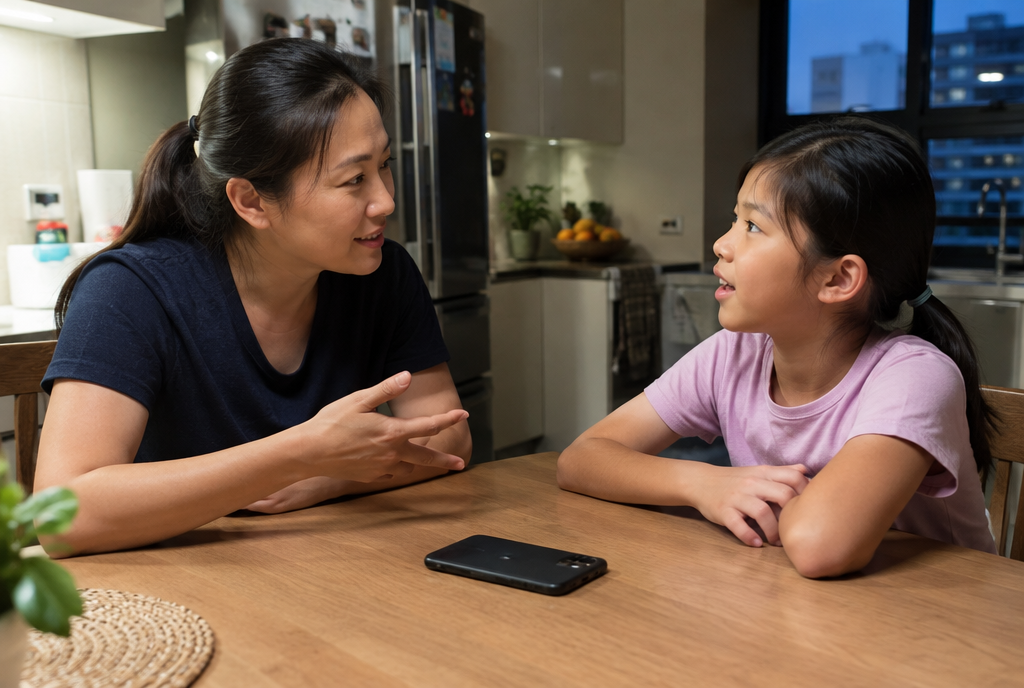
- Sunday: one picture, three beats from Table 2, with the phone face-down so it is a conversation and not a performance for the camera.
- Stop at 15 minutes. Oral practice that turns into a scolding is practice the child will avoid in July, which is when it matters.
- From June of the PSLE year, add a tutor only if the recordings show a problem you cannot unblock: inaudible reading, or answers that never leave the picture.
A short block of oral sessions is a different booking from a year of English tuition. Say which one you want. P6 rates, and which tutor type fits a technique gap rather than a content gap, are on the tutor types page.
Questions parents ask
What is tested in PSLE English oral?
Paper 4 is Oral Communication, 40 marks and 20% of PSLE English. There are two parts: reading a passage aloud, and a stimulus-based conversation about a photograph or picture. The pupil has about five minutes to prepare, then about ten minutes with the examiners. The passage and the picture are unseen.
How is the stimulus-based conversation marked?
The examiners move from the picture to the pupil’s own experience and then to an opinion. A pupil who only describes the picture, and stops, has answered the first prompt. Marks for the later prompts need a reason and a short example from the child’s life. Reciting a memorised speech about a value, with no link to the picture, does not follow the conversation.
How can we practise reading aloud at home?
Three times a week, one paragraph from a book the child did not choose for this purpose. First read for the full stops. Second read for the words they stumbled on. Third read at a volume a person across the table can hear, without racing. Record the third read on a phone and play it once. Ten minutes is enough. A new passage every time matters more than polishing one passage for a month.
When is the PSLE oral exam?
In recent years the oral examination has been in August, before the written papers in late September. SEAB has not published the 2027 PSLE timetable. The 2026 written papers were 24 to 30 September. Keep the child in Singapore for the August fortnight once SEAB releases the 2027 dates. The school calendar page tracks that release.
Does oral tuition help?
It helps when the child reads accurately and still cannot sustain a conversation past the picture, or when they are accurate on paper and inaudible in the room. It helps less when the child has not read aloud at all: that practice can happen at the kitchen table. A few sessions with a tutor who will interrupt and ask “why” is the usual brief, not a weekly composition lesson relabelled as oral.
Sources
- Singapore Examinations and Assessment Board, PSLE. English Paper 4 is Oral Communication: reading aloud and stimulus-based conversation, after a short preparation. It is 40 marks and 20% of the English examination. Confirm the current duration on the syllabus for the exam year. Accessed 13 October 2026. https://www.seab.gov.sg/psle/
- Singapore Examinations and Assessment Board, 2026 PSLE examination timetable. Written papers from 24 to 30 September 2026. The oral sitting is a separate date on that timetable, earlier in the term. The 2027 oral date is not published. Accessed 13 October 2026. https://file.go.gov.sg/2026-psle-exam-cal.pdf