PSLE Chinese Oral: How to Practise at Home
9 November 2026 · Tutor Circle
This page is the practice. The exam is an e-oral: a passage and a short video, not a picture you hold. [1] What the video is for, and the mistakes of narrating objects or reciting a speech, are on the format page. [2] The scene below is a different one, written here. It is not a script to memorise.
- Your cue, in English
- Answer first. One reason about this scene. One example. Stop.
- Their answer
- In Chinese. You record it. You do not rewrite it.
- January to May
- About 10 minutes a week
- June to the oral
- About 30 minutes a week, in ten-minute recordings
- The tutor brief
- PSLE Chinese oral, video conversation. Not composition.
How many minutes
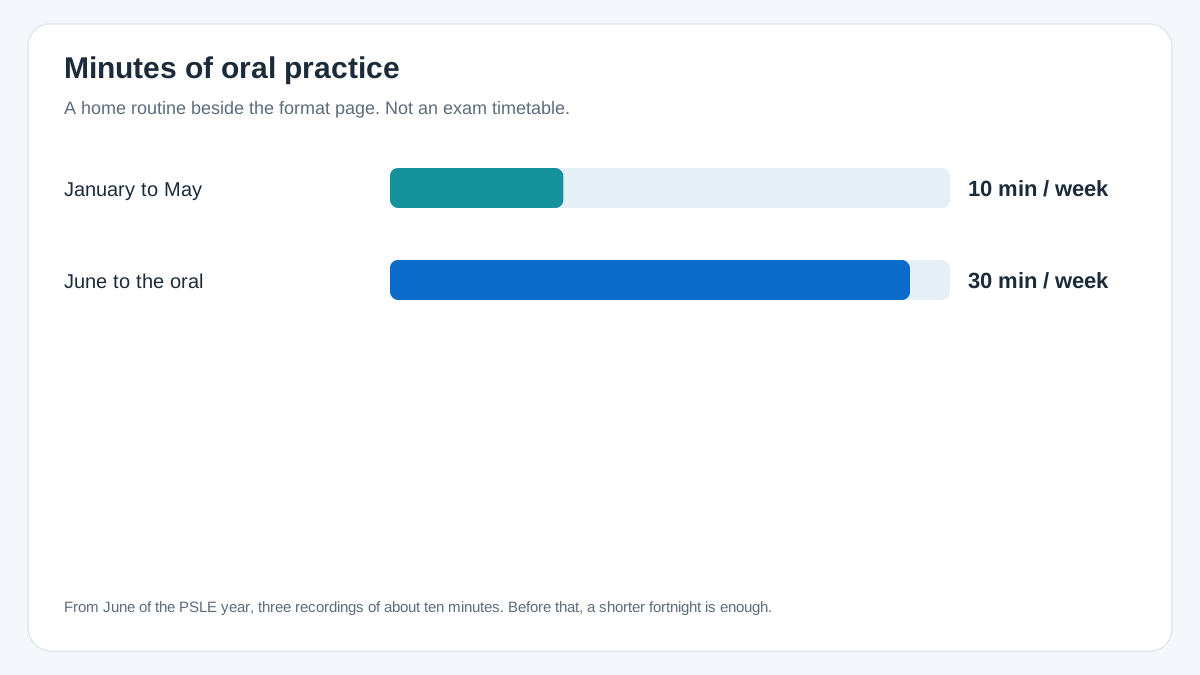
Before June, one short reading and one short answer a fortnight keep the shape familiar. That averages about ten minutes in a week. From June, three recordings of about ten minutes are enough. If you do not speak Chinese, the way to run those minutes without guessing at tones is on the English-speaking home page.
The English prompt
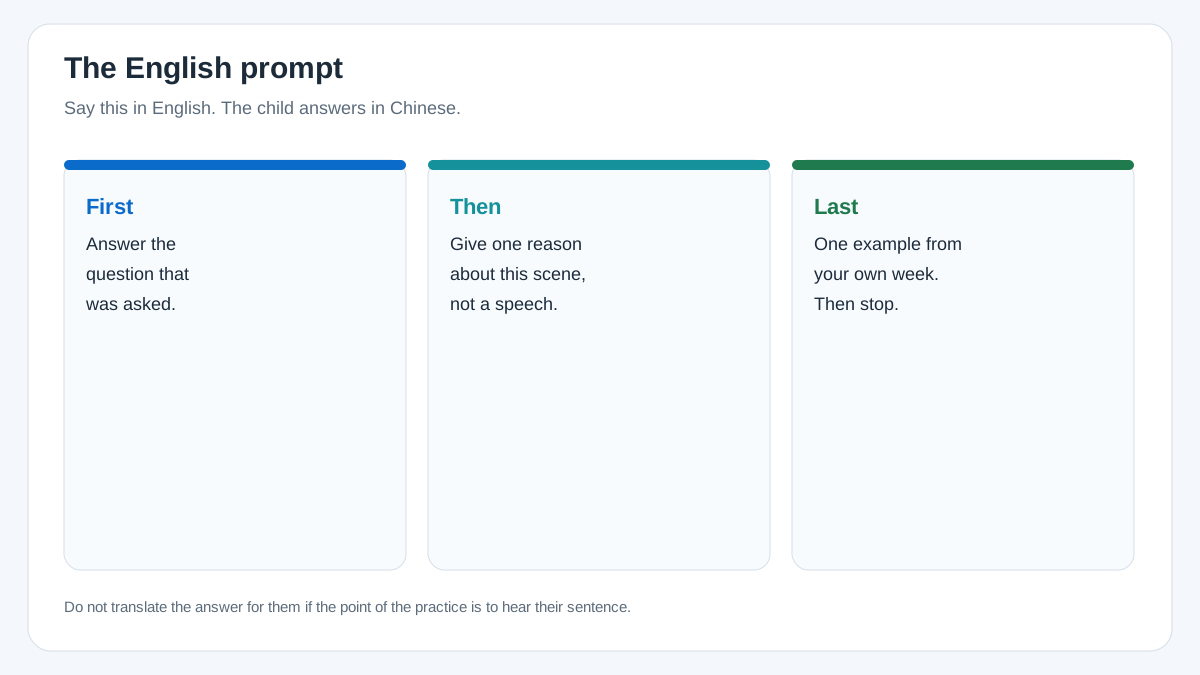
- Answer the question that was asked.
- Give one reason, and the reason has to be about this scene.
- Then one example from your own week, of the same kind of situation.
- Stop. A speech about being a good person, with the scene left behind, is not the answer.
A practice scene
Original practice. The scene is a school library at closing time. One pupil leaves a borrowed book on the table. Another takes it to the counter. A narration of the furniture is not the task.
朗读
图书馆快关门了。小杰把借来的书留在桌上,就跑去找朋友。小莉看见了,把书送到服务台。管理员谢谢她。小莉没有去喊小杰。
Listen once for a pause at the full stops. You do not need to judge every tone to hear a reading that never pauses, or a character that is skipped. Mark that place and read the sentence again. Leave the tone to someone who speaks Chinese.
会话
Parent, in English: answer first, then one reason about this scene. 问:你觉得小莉把书送到服务台,做得好吗?为什么?
答:我觉得她做得好。书留在桌上,别人会以为没有人借。她把书送到服务台,管理员就可以把书放回原位。
Parent, in English: what would you do, then one example from your own week, then stop. 问:如果你看到同样的情况,你会怎么做?
答:我也会把书送到服务台。如果小杰是我的同学,我第二天会告诉他,下次要自己还。上星期在学校图书馆,我帮同桌送回过一本故事书。
The first answer gives a view and a reason tied to the book on the table. The second answers “what would you do” before the personal example. A child who starts with last week’s story, and never says they would take the book to the counter, has not answered. Ask the question again.
Choosing the tutor
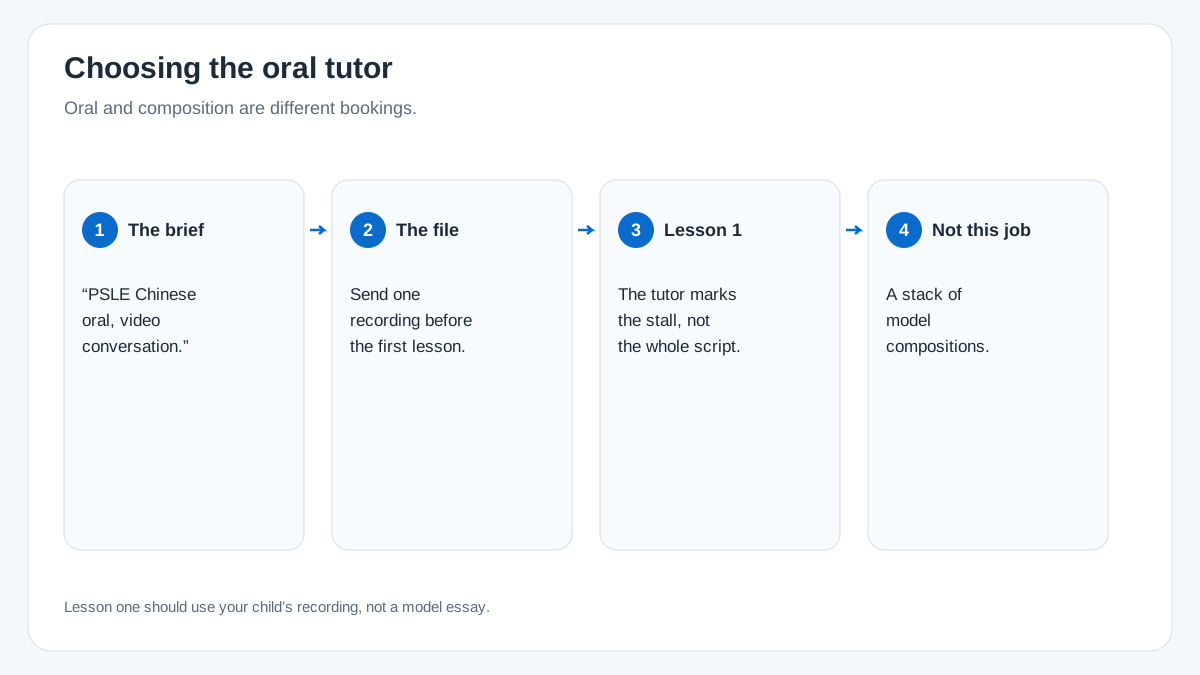
- Write “PSLE Chinese oral, video conversation” on the request.
- Send one recording before the lesson, including a stall if you have one.
- Ask the tutor to name the stall in a sentence, and to ignore a missing noun if the sentence was finished another way.
- If the profile is mostly composition results, ask whether they will run a conversation. Written Chinese is the composition page.
Book a Chinese tutor for a short block of oral lessons when the same stall survives three recordings. You do not need a year of essay practice to repair a conversation.
Questions parents ask
Is this dialogue from the exam?
No. The passage, the scene and the answers were written for practice. The PSLE oral uses a passage and a short video on a computer. A child who recites this page will be talking about a different video. The format is explained on the Chinese oral page.
Can I prompt in English?
Yes. Say the three cues in English: answer the question first, give one reason about this scene, then one example from your own week, and stop. The child answers in Chinese. Do not translate their answer into a better one and ask them to memorise it.
How often should we practise?
From June of the PSLE year, about three recordings a week, ten minutes each. From January to May, about ten minutes a week is enough to keep the shape familiar. More than that, without someone checking the Chinese, is extra noise.
Who should the tutor be?
Someone who will listen to your recording in lesson one and name the stall. The brief is “PSLE Chinese oral, video conversation.” A stack of model compositions is a different job. Ask whether they have run the conversation, not only marked essays.
Sources
- Singapore Examinations and Assessment Board, PSLE formats examined in 2026. From 2017, the Mother Tongue oral is an e-examination. Accessed 9 November 2026. https://www.seab.gov.sg/psle/psle-formats-examined-in-2026/
- Tutor Circle, PSLE Chinese oral. What the video is for, where answers stall, and a different practice scene. Accessed 9 November 2026. https://tutorcircle.sg/psle-chinese-oral