Primary 5 Maths: Why Results Drop and How to Close the Gaps
27 October 2026 · Tutor Circle
Primary 5 is the year a steady Primary 4 mark often slips, because the paper starts asking for new operations inside a story. The useful response is a short diagnosis: fraction, percentage, rate, or the reading of the question. A general “more practice” plan repeats the drop.
- Who this is for
- Families going into Primary 5, or already in it and watching the marks move
- What is new
- Multiplying fractions, percentage, rate, triangle area, volume
- What moved to Primary 6
- Ratio and average, on the syllabus updated in October 2025
- Level
- Standard or foundation, from the Primary 4 results. They are different lists
- Catch-up
- One failed topic, two to four weeks, then the next topic
Why the mark moves
Primary 4 fractions are mostly addition and subtraction. Primary 5 standard mathematics asks the child to multiply a fraction by a whole number, by another fraction, and by a mixed number, and then to do that inside a question about muffins or money. Percentage arrives in the same year: a part of a whole, then discount, GST and annual interest. Rate arrives as “how much per unit”. None of these is a harder version of last year’s worksheet. Each one is a new idea. [1]
Parents who sat the PSLE earlier remember ratio as the Primary 5 shock. School briefings for 2026 say that shock has moved. Ratio and average are now Primary 6 topics. [2] A Primary 5 child drilled on an old ratio chapter is practising next year’s list while this year’s percentage is still loose. Check the school’s scheme of work before you trust the year printed on a workbook.
What Primary 5 actually contains
| Topic | The new move | A sign it is the gap |
|---|---|---|
| Fractions | Multiply fractions and mixed numbers. A fraction of a fraction of a set | The child adds the fractions because “of” was never tied to multiply |
| Percentage | A percentage of an amount, then discount, GST and one year of interest | The child subtracts 25 from $40 and calls it a 25% discount |
| Rate | Amount per unit, then the total or the number of units | The child multiplies the two numbers in the question in the order they appear |
| Area and volume | Area of a triangle, then cubes and cuboids in cubic units | Base and height are taken as the two sides that look longest |
| Angles | Straight line, a point, vertically opposite angles, triangles and the common quadrilaterals | The child remembers 180° and applies it to the wrong pair of angles |
Word problems are not a separate topic. They are how each row above is examined. A child who can do the naked sum and cannot start the story has a reading gap on that topic. A child who cannot do the naked sum has a topic gap. Those need different weeks.
From Primary 5, mathematics is standard or foundation, decided from the Primary 4 school results. [3] Foundation does not quietly include the standard percentage questions. Book the tutor for the level on the timetable.
Three questions that name the gap
These were written for this page. They are not school exam questions. Do them without a calculator, on paper, and watch where the child stops. Stopping is the diagnosis. The final number is less informative.
1. Fraction of a fraction
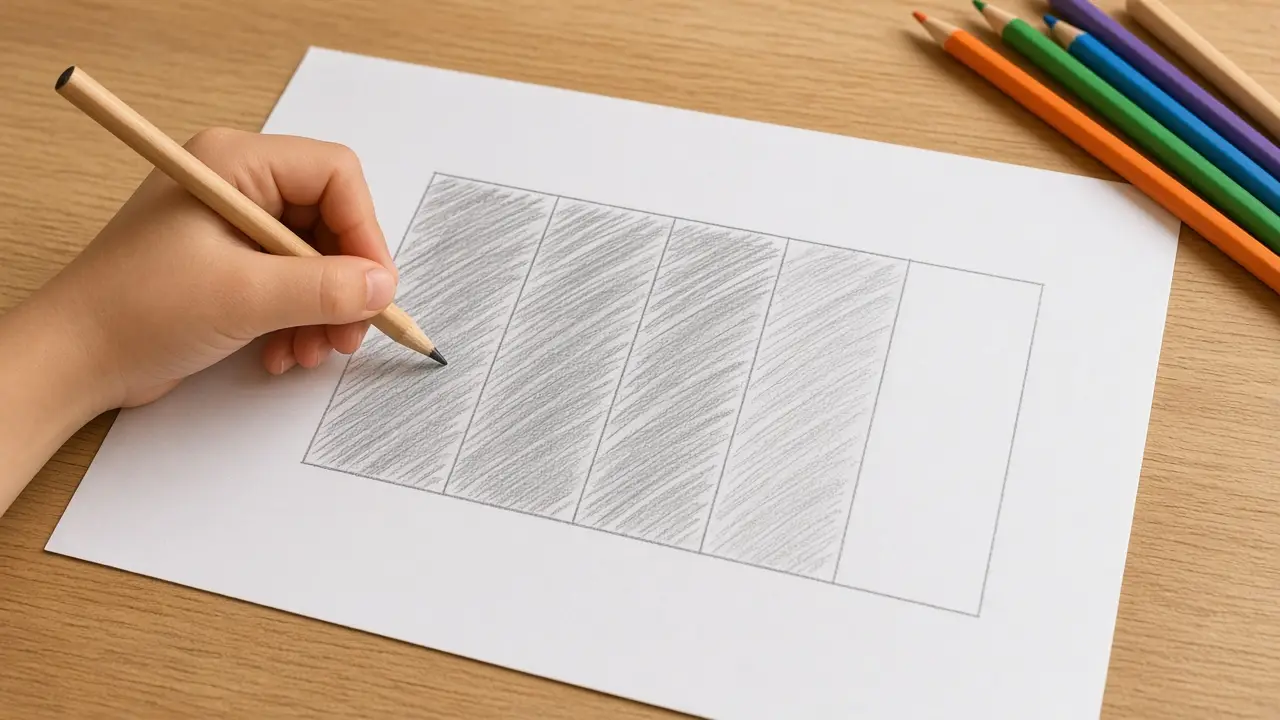
There are 40 muffins. 3/4 of them are chocolate. 2/5 of the chocolate muffins have nuts. How many chocolate muffins have nuts?
- A clean method: 3/4 of 40 is 30 chocolate muffins. 2/5 of 30 is 12.
- Adding 3/4 and 2/5 means the word “of” has not become multiplication. That is a fraction gap.
- Getting 30 and then stopping means the second “of” was not read as a fraction of the subset. That is a word-problem gap on a fraction the child can already compute.
- No start at all, on a question this short, is a reason to check whether the paper in school is standard or foundation before you add harder books.
2. Percentage, with the rate written in
A shirt costs $40. It is sold at a 25% discount. What is the sale price?
- A clean method: 25% of $40 is $10. The sale price is $30.
- $40 − 25 = $15 means percentage is still being treated as a number of dollars. Stay on percentage. Do not move on to GST yet.
- Finding the $10 and writing it as the answer means the discount was found and not taken off. One sentence of correction, then two more questions of the same shape.
- GST in the syllabus is the same skill with the rate the question states. In 2026 the national GST rate is 9%. The exam paper will still state the rate. Do not make the child memorise 9 as if it were part of the method.
3. A ratio question, used only as a year check
The ratio of red pens to blue pens is 2 : 3. There are 20 pens altogether. How many are red?
- A clean method: 2 + 3 = 5 units. 20 ÷ 5 = 4. Red is 2 units, so 8 pens.
- For a Primary 5 child in 2026, a miss here is not a Primary 5 gap. Ratio is on the Primary 6 list. File the question for next year.
- For a child going into Primary 6, a miss here is the gap to teach first, before circles and the rest of the Primary 6 list. The bar-model version of this, including before-and-after, is on the model-drawing page.
A four-week catch-up

| Week | If the gap was… | What “done” looks like |
|---|---|---|
| 1 | Fraction of a set | Six questions, mixed numbers included, with the working written as multiplication |
| 2 | A fraction of that result | Question 1’s shape, three times, without a hint on the second “of” |
| 3 | Percentage of an amount, then a discount | The child states the discount and the sale price as two different numbers |
| 4 | Rate, or triangle area, whichever the school test missed | The child says which quantity is “per unit” before calculating |
One sitting of 20 to 30 minutes is enough. A second topic in the same sitting hides which one failed. If week 4 is still the same error as week 1, the home plan has stalled and a tutor who will mark the working, not only the answer, is the next step. Primary 5 rates, by tutor type, are on the rate table. The same fraction story drawn as bars is on the before-and-after model page.
Questions parents ask
Why do Primary 5 maths results drop?
Primary 5 standard mathematics introduces multiplying fractions, percentage (including discount, GST and annual interest), rate, the area of a triangle, and volume in cubic centimetres. A child who was steady on Primary 4 addition and subtraction of fractions meets a new operation and a new set of word problems in the same term. The drop is usually one of those topics, not a sudden loss of ability.
Is ratio still a Primary 5 topic?
On the primary mathematics syllabus updated in October 2025, ratio sits with the later topics, and 2026 school briefings tell parents that ratio and average, previously taught from Primary 5, are now taught in Primary 6. A Primary 5 child who cannot do a ratio question is not behind the current Primary 5 list. A Primary 6 child who cannot is. Use the school’s scheme of work if an older workbook still prints ratio under Primary 5.
What is the difference between standard and foundation mathematics in Primary 5?
From Primary 5, mathematics is offered at standard or foundation, based on the Primary 4 school results. Foundation is a shorter list. A standard assessment book on a foundation timetable teaches topics the child is not being examined on. Ask the school which level is on the timetable before you buy the book or book the tutor.
How long should a catch-up take?
One topic at a time, for two to four weeks, on the topic the diagnostic actually failed. Multiplying fractions, then percentage of a quantity, then rate, is a usable Primary 5 order. Adding ratio, average and exam papers in the same month is how the catch-up becomes another drop.
When is a tutor worth it for Primary 5 maths?
When the child can compute a fraction in a naked sum and still cannot start the same fraction inside a story, or when percentage of a quantity is still “subtract the percent from the dollars” after two weeks at home. Say Primary 5, standard or foundation, and the topic, on the request. Rates are on the rate table.
Sources
- Ministry of Education, 2021 Primary Mathematics Syllabus, Primary 1 to Primary 6, updated October 2025. Primary 5 standard number topics include fractions (including multiplication of fractions and mixed numbers), percentage (a part of a whole, discount, GST and annual interest), and rate. Ratio is set out with the later number topics. Accessed 27 October 2026. https://www.moe.gov.sg/primary/curriculum/syllabus
- St Joseph’s Institution Junior, Upper Primary Mathematics Sharing for 2026. The school’s parent note lists ratio and average as topics that used to be taught in Primary 5 and are now taught in Primary 6, following the updated syllabus. One school’s briefing, not a second syllabus. Accessed 27 October 2026. https://www.sjijunior.moe.edu.sg/files/2026_MATHEMATICS_UPPER_PRIMARY_PARENTS.pdf
- Ministry of Education, primary school subjects and syllabuses. In Primary 5 and 6, English, Mother Tongue, Mathematics and Science are offered at foundation or standard level, depending on Primary 4 school examination results. Accessed 27 October 2026. https://www.moe.gov.sg/primary/curriculum/syllabus