Infant Care in Singapore
13 October 2026 · Tutor Circle
Infant care in Singapore is a licensed class for a child from 2 months old up to the day before 18 months. The legal staffing floor is one infant educator for every five children. A Singapore Citizen child in a full-day programme can draw a Basic Subsidy of $600 a month if the main applicant is working, and more on top if household income qualifies.
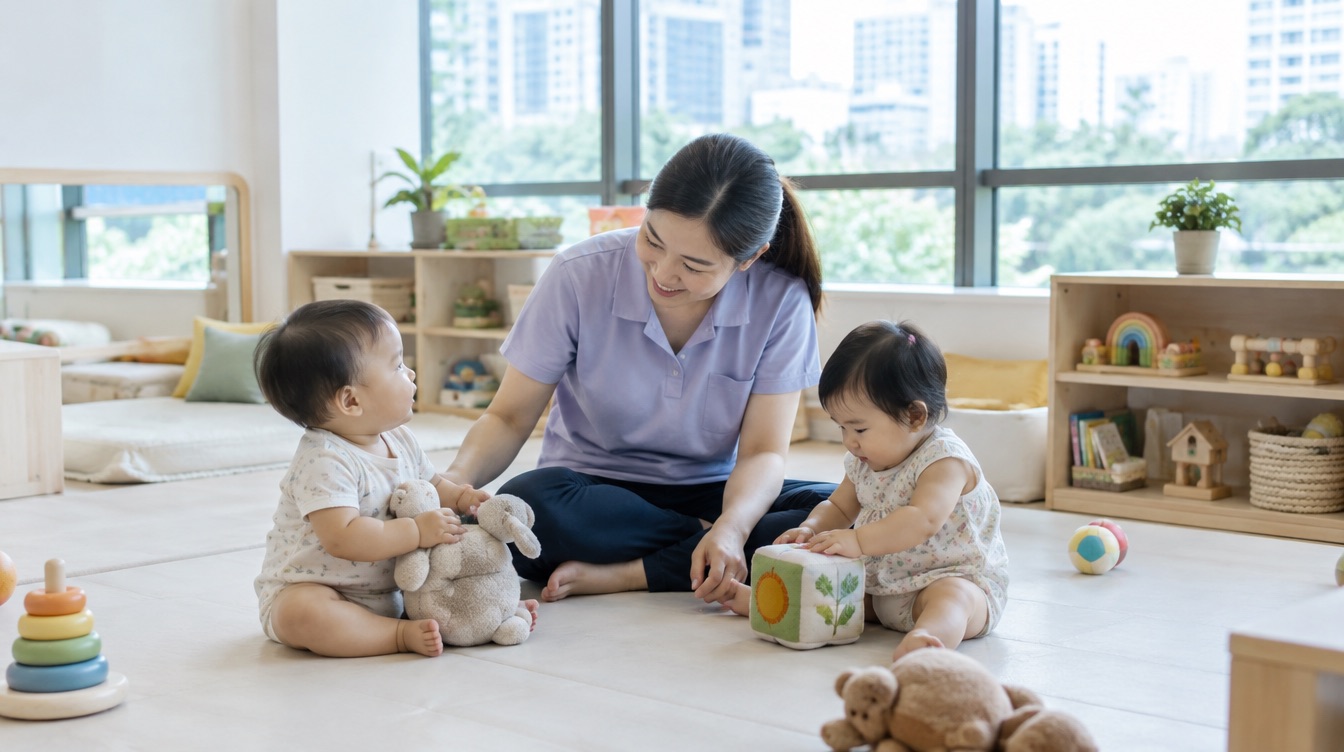
- Age
- 2 months to below 18 months. Then childcare, starting with playgroup
- Ratio
- At least 1 infant educator to 5 children, during operating hours
- Full day
- More than 6 hours. The subsidy table below is for full-day programmes
- Working applicant
- $600 Basic Subsidy. Up to $1,310 total at household income of $3,000 or below
- Non-working
- $150 Basic Subsidy. No Additional Subsidy
- Who qualifies
- The child is a Singapore Citizen. The subsidy is paid to the centre
Age bands
The Early Childhood Development Centres Regulations set the class by the child’s age. Infant care and childcare are different programmes, with different subsidies. [1] [2]
| Class | Who is in it | A ratio parents can quote |
|---|---|---|
| Infant | 2 months to below 18 months | At least 1 infant educator to 5 children, in operating hours |
| Playgroup | 18 months to below 3 years | At least 1 early years educator to 8 children, during programme hours |
| Pre-nursery | Children who turn 3 in the year the class starts | A looser ratio than playgroup. See the regulations |
| Nursery, K1, K2 | Turning 4, 5 and 6 in the year the class starts | Kindergarten years. MOE Kindergarten is a separate calendar |
Full-day services run for more than 6 hours in a day. Half-day services do not exceed 6 hours. [1] The dollar table further down is the full-day infant table. Half-day amounts are lower. ECDA’s page is the one to use for a half-day or flexi place.
MOE school holidays do not close an infant class. Those dates are for MOE Kindergartens and schools, on the 2026 and 2027 pages. Ask the centre for its own closure list.
Staffing and the room
Regulation 44 requires that, for every infant class, the ratio of infant educators to children enrolled in that class is at least 1:5 at all times during operating hours. If programme helpers assist, two tests apply together: infant educators and helpers together are still at least 1:5, and there is at least one infant educator for every helper. [1]
An infant educator is a person approved to do that job. A helper is not a substitute for the educator in the second test. When you visit, ask who in the room is the infant educator, and how many children are enrolled in that class, not how many happen to be present at nap time.
The centre must provide one sink and one diaper-changing area for every 10 children enrolled in its infant classes. Each changing area needs a table with raised sides, next to a sink with running water. [1] That is a licensing rule. It is also the thing to look at on a tour: raised sides, a sink you can see, and a bin that is not the same as the milk-prep sink.
A commercial indoor playground does not use this ratio. The adult who brought the child supervises there. The playground guide is separate: how to choose an indoor playground.
Subsidies
The scheme is for a Singapore Citizen child. The main applicant is the mother. If she is unavailable, in cases ECDA describes as divorced, separated or widowed, the applicant is the single father. Working status and household income are assessed at the point ECDA sets. The subsidy is paid to the centre. Parents pay the fee after subsidy, and a minimum co-payment still applies. [2] [3]
| Gross monthly household income | Per capita income | Additional Subsidy | Maximum total |
|---|---|---|---|
| $3,000 and below | $750 and below | $710 | $1,310 |
| $3,001 – $4,500 | $751 – $1,125 | $640 | $1,240 |
| $4,501 – $6,000 | $1,126 – $1,500 | $500 | $1,100 |
| $6,001 – $7,500 | $1,501 – $1,875 | $380 | $980 |
| $7,501 – $9,000 | $1,876 – $2,250 | $240 | $840 |
| $9,001 – $10,500 | $2,251 – $2,625 | $100 | $700 |
| $10,501 – $12,000 | $2,626 – $3,000 | $40 | $640 |
| Above $12,000 | Above $3,000 | None | $600 |
Maximum full-day infant care subsidy, by household income
A non-working applicant receives $150 Basic Subsidy and no Additional Subsidy. Childcare, from 18 months, has its own table: Basic Subsidy of $300 for a working applicant on a full-day programme, and Additional Subsidy up to $467. [2] The drop at 18 months is expected. Budget for it when the infant place ends.
Anchor Operator and Partner Operator centres have fee caps ECDA publishes. Compare the fee after subsidy on LifeSG, not the number on a brochure photo. A lower brochure fee at a centre outside those schemes can still cost more once the subsidy is applied.
How to apply
- Search centres on LifeSG with Singpass. The estimate is the fee after subsidy, for the programme type you select.
- Enrol with the centre. The centre triggers the subsidy application.
- Complete the LifeSG form within 14 calendar days of the email, including consent from household members if their income is needed. [4]
- A household of five or more may choose per capita income if that produces a higher subsidy.
- The child must attend at least one day in a month for that month’s subsidy to be paid. [2]
- Lower-income families can ask the centre about Child Care Financial Assistance and the Start-Up Grant on the same form. ECDA asks for documents. A letter of referral, if you are using one, can follow.
Choosing a centre
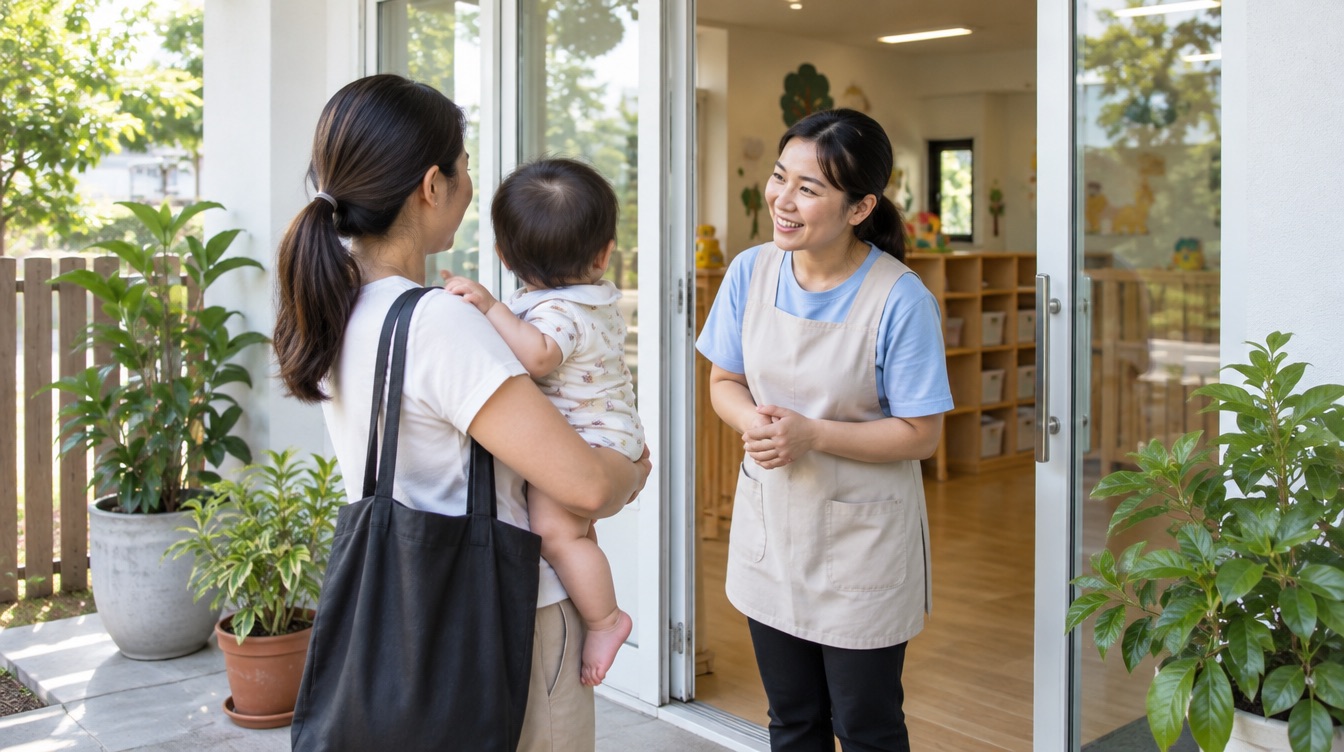
On the visit
- Count the enrolled infants against the educators, using the centre’s own register, and ask what happens at the educator’s lunch.
- Look at the changing table, the sink, and where milk is prepared. Those should not share a bowl.
- Ask the closure list, the latest drop-off, and what happens if you are late. Infant care is often 7am to 7pm, but the licence is the centre’s hours, not a national clock.
- Ask how they tell you about a fever, and whether you can visit in the first weeks. Settling-in is normal. A centre that bars all contact is a different question from a centre that spaces out visits so the room stays calm.
- Permanent Residents and non-citizens are outside the Citizen subsidy table. Ask for the full fee in writing.
Infant care is care and development. It is not primary tuition. When the child reaches kindergarten age, one-to-one support is a different search, on the preschool tuition page. Tutor Circle matches tutors for that later stage. Parents pay the tutor. WhatsApp +65 9628 4702, daily from 9am to 8pm.
Questions parents ask
What age is infant care in Singapore?
An infant class at a licensed early childhood development centre is for children who are 2 months of age or older and below 18 months. From 18 months the child moves into childcare, starting with playgroup, which the regulations define as 18 months to under 3 years.
What is the staff ratio for infant care?
During the centre’s operating hours, the ratio of infant educators to children in an infant class must be at least 1 to 5. If programme helpers assist, the combined number of infant educators and helpers must still be at least 1 to 5, and there must be at least one infant educator for every helper.
How much is the infant care subsidy?
For a Singapore Citizen child in a full-day infant care programme, a working main applicant receives a Basic Subsidy of $600 a month. Additional Subsidy can bring the total as high as $1,310 a month when gross monthly household income is $3,000 or below, subject to a minimum co-payment. A non-working applicant receives $150 Basic Subsidy and no Additional Subsidy. The centre is paid the subsidy. Parents pay the fee after subsidy.
Do MOE school holidays close infant care?
No. MOE term dates apply to MOE Kindergartens and schools. An ECDA centre sets its own closure list. Ask for that list before you enrol, especially around Chinese New Year and the December period the centre chooses.
When should we apply?
Infant places in popular centres fill early. Search centres on LifeSG with Singpass, compare the estimated fee after subsidy, and complete the centre’s subsidy form within the deadline LifeSG gives, which ECDA describes as 14 calendar days from the email. The child must attend at least one day in a month to receive that month’s subsidy.
Sources
Ages, hours and ratios are from the Early Childhood Development Centres Regulations. Subsidy amounts are from ECDA and the Made For Families table for full-day infant care. Centres change fees. The LifeSG estimate for your household is the figure to compare.
- Early Childhood Development Centres Regulations 2018. An infant class is for children 2 months of age or older but below 18 months. A playgroup class is for children 18 months or older but below 3 years. Full-day services exceed 6 hours in a day. Half-day services do not exceed 6 hours. Regulation 44 requires at least one infant educator for every five children in the class during operating hours, with the helper rules in paragraph (2). The facilities schedule requires one sink and diaper-changing area for every 10 children enrolled in the centre’s infant classes. Accessed 13 October 2026. https://sso.agc.gov.sg/SL/ECDCA2017-S890-2018
- Early Childhood Development Agency, “Overview of the infant and childcare subsidy scheme.” For a Singapore Citizen child in a full-day programme, infant care Basic Subsidy is $600 for a working main applicant and $150 for a non-working applicant. Additional Subsidy for infant care is up to $710. The main applicant is the mother, or the single father if the mother is unavailable. Subsidies are paid to the preschool. The child must attend at least one day in the month. Families remain subject to a minimum co-payment. Accessed 13 October 2026. https://www.ecda.gov.sg/parents/preschool-subsidies/infant-and-childcare-subsidy-scheme/overview
- Made For Families, “Subsidies for Preschool.” Monthly subsidy table for full-day infant care for a Singapore Citizen child aged between two and 18 months, by household income band, including Basic Subsidy of $600 and the Additional Subsidy amounts that produce maximum totals from $1,310 down to $600. Figures are subject to minimum co-payment. Accessed 13 October 2026. https://www.madeforfamilies.gov.sg/support-measures/child-raising/preschool/subsidies-for-preschool
- Early Childhood Development Agency, how to apply for preschool subsidies for a new enrolment. The LifeSG form is to be completed within 14 calendar days of the email. Employment and income information are used to set the subsidy. Larger families of five or more may opt for per capita income. Accessed 13 October 2026. https://www.ecda.gov.sg/parents/preschool-subsidies/how-to-apply-or-make-changes-to-subsidies/subsidy-application-for-new-preschool-enrolment/how-to-apply