GEP Screening: What It Tests Now, and Should You Prepare?
13 October 2026 · Tutor Circle
The two-stage GEP screening test is finished. Primary 3 pupils in 2026 sat one identification exercise in August, and schools added what they already know about the child. From 2027, no new Primary 4 class enters the Gifted Education Programme. The last GEP cohort finishes Primary 6 in 2028. In its place, schools stretch about 10% of pupils where they already study, and 15 centres run after-school modules for those who need more.
- Old test
- Two stages, then a transfer to one of nine GEP schools at Primary 4. About 1% of a cohort
- Now
- One standardised exercise in Primary 3, plus the school’s own evidence
- August 2026
- Already sat, by the Primary 3 cohort of 2026. They are the first under the new rules
- From 2027
- No new GEP Primary 4 admission. Last GEP class finishes Primary 6 in 2028
- Instead
- School programmes for about 10% of pupils, and optional modules at 15 centres
- Later entry
- Schools can identify pupils again at the end of each semester in P4 and P5
What happens now
MOE set this out on 3 March 2026, following the announcement at National Day Rally 2024. The GEP page on moe.gov.sg confirms the dates: no new Primary 4 admission from 2027, and the existing classes run on until 2028. Pupils already in the GEP stay on that programme. Everyone else is on the new arrangement. [1] [2]
| GEP, as it was | From 2027 | |
|---|---|---|
| Who | About 1% of a cohort, strong across subjects | About 10% in school programmes, up from about 7%. A further group at the centres, by subject |
| When you can join | Once, into Primary 4 | After the P3 exercise, and again at the end of each semester in P4 and P5 |
| Where | A transfer to one of nine GEP schools | The child’s own school, plus an optional nearby centre |
| What is taught | A separate enriched curriculum | School provisions, and centre modules that are not the national curriculum |
| The test | Two stages, screening then selection | One standardised exercise, plus teacher observations and the child’s work |
A child who is strong in English and ordinary in mathematics can be in an English programme. The old test required strength across English, mathematics and the general-ability paper. That all-round hurdle is what MOE removed.
What the exercise is, and is not
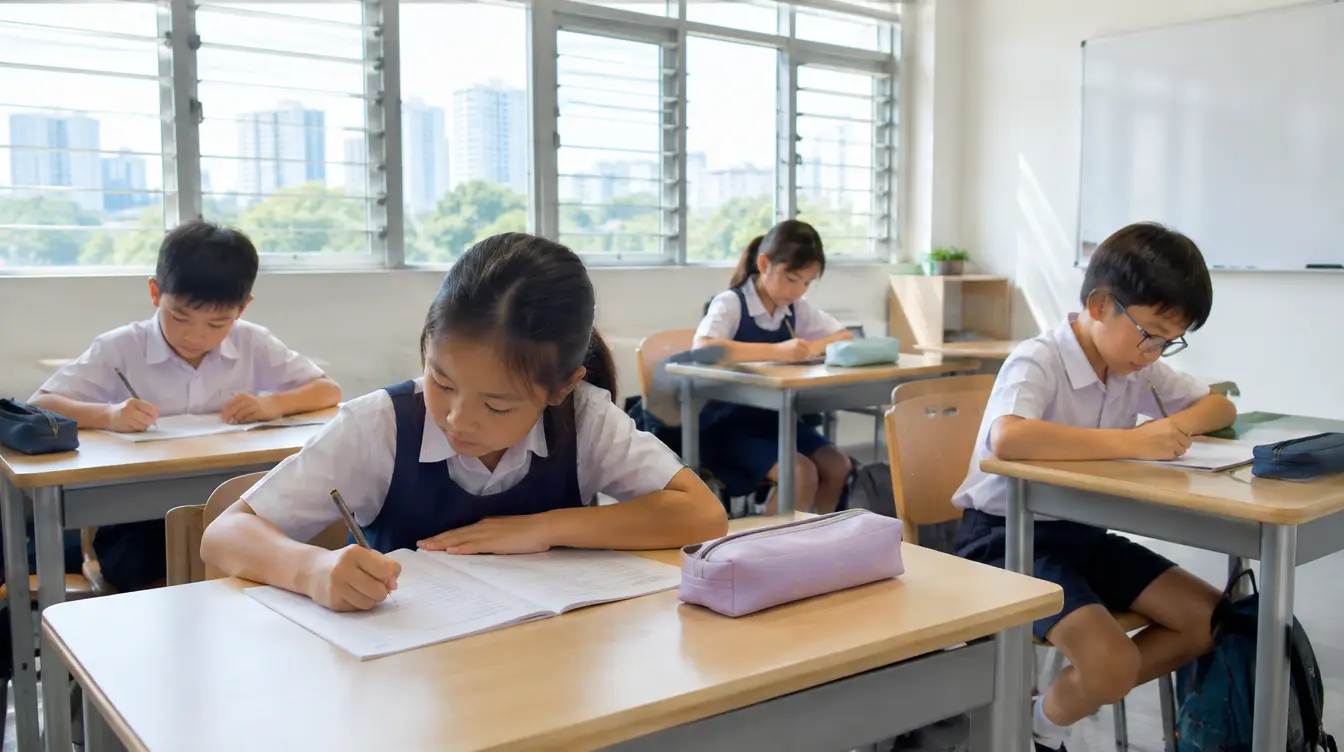
MOE has described the new step as a standardised one-stage identification exercise in Primary 3. It replaces both the old screening paper and the old selection paper. Schools also use day-to-day evidence: observations, recommendations and the child’s work. MOE said it would guide schools on that. It has not published a commercial set of specimen questions.
The August 2026 sitting has already happened. It was for pupils who were in Primary 3 in 2026. They are the first group who will not be posted into a GEP class at Primary 4 in 2027. Families waiting on an outcome should hear it from the school. A forum thread is not the result letter.
The test people still describe online
Older write-ups still say every Primary 3 pupil sits an English and Mathematics screening in August, and a smaller group is called back for a second paper. That was the GEP. It is the process this reform ended. Using those write-ups to plan a 2027 Primary 3 year will aim the child at the wrong paper.
Should you prepare?

- Do the Primary 3 English and Mathematics the school has set, including the written explanations, not only the ticks. That is the work the exercise and the teachers can both see.
- Skip a “GEP second-round” package. The second round does not exist for this cohort.
- If the child is bored in one subject, tell the form teacher. Identification after Primary 3 is allowed at the end of each semester in Primary 4 and Primary 5, and it uses school evidence.
- A tutor is reasonable when Primary 3 English or Mathematics is actually shaky. That is ordinary tuition. It is a poor use of money when the only goal is to out-train an identification exercise MOE has not published.
Rates, if the schoolwork itself needs help, are on the P3 rate table. The centres are optional and after school. They are not a reason to change primary school at P1 registration.
The 15 centres

From 2027, a pupil accepted for further stretch can go to a weekly module in English, Mathematics or Science at a centre near their own school. CNA reported the sessions as two hours, after school, in term time, with interdisciplinary modules in the holidays. The child does not become a pupil of the centre. The nine former GEP host schools stop being GEP centres. [3]
| Centre | Centre | Centre |
|---|---|---|
| Ahmad Ibrahim Primary | Clementi Primary | Geylang Methodist (Primary) |
| Innova Primary | Jurong West Primary | Kheng Cheng School |
| Palm View Primary | Pioneer Primary | Punggol View Primary |
| Queenstown Primary | St Gabriel’s Primary | Tampines Primary |
| Teck Ghee Primary | Yew Tee Primary | Yu Neng Primary |
The nine schools that hosted the GEP were Anglo-Chinese School (Primary), Catholic High (Primary), Henry Park, Nan Hua, Nanyang, Raffles Girls’, Rosyth, St Hilda’s and Tao Nan. They remain primary schools. They are no longer the only door to this kind of class.
Questions parents ask
Is there still a GEP screening test?
The old two-stage GEP selection is over. Primary 3 pupils in 2026 were the first cohort to sit a single standardised identification exercise, in August 2026, together with information from school such as the child’s work and the teachers’ observations. From 2027, the GEP does not take new Primary 4 pupils. The last GEP cohort finishes Primary 6 in 2028.
What replaced the GEP?
Two things. Every primary school offers school-based programmes for pupils with a strength in a subject. MOE expects about 10% of a cohort to be in these, up from about 7%. Pupils who need more stretch can choose weekly after-school modules in English, Mathematics or Science at one of 15 centres near their own school. They stay enrolled at their own school. They do not transfer to a GEP school.
Should I send my Primary 3 child for GEP preparation?
A course built on the discontinued second-stage selection paper is preparing the child for an exam they will not sit. MOE has not published a past-paper syllabus for the new one-stage exercise. The work that helps is the Primary 3 English and Mathematics the school is already teaching, done properly. A heavy out-of-school drill on top of that is how a Primary 3 year becomes a second school.
Can a child join later than Primary 4?
Yes. After the Primary 3 exercise, schools can identify pupils at the end of each semester in Primary 4 and Primary 5 for the school-based programmes and, where suitable, the centre modules. The old rule, one chance at the start of Primary 4, is the part MOE removed.
Which schools host the new advanced modules?
From 2027 the centres are Ahmad Ibrahim Primary, Clementi Primary, Geylang Methodist School (Primary), Innova Primary, Jurong West Primary, Kheng Cheng School, Palm View Primary, Pioneer Primary, Punggol View Primary, Queenstown Primary, St Gabriel’s Primary, Tampines Primary, Teck Ghee Primary, Yew Tee Primary and Yu Neng Primary. A child attends the centre near their own school. MOE will review the list.
Sources
- Ministry of Education, “Learning Together with Different Strengths and Needs,” 3 March 2026. From 2027 the GEP in its current form is discontinued and stops admitting new Primary 4 pupils. About 10% of a cohort can use school-based provisions, up from about 7%. Pupils who need further stretch may attend weekly advanced modules at a nearby centre and do not transfer school. Primary 3 pupils in 2026 sit one identification exercise in August 2026. Pupils can also be identified at the end of each semester in Primary 4 and Primary 5. Accessed 13 October 2026. https://www.moe.gov.sg/news/press-releases/20260303-learning-together-with-different-strengths-and-needs
- Ministry of Education, Gifted Education Programme, updated 11 March 2026. The GEP ceases to admit new Primary 4 students from 2027. Existing classes continue until 2028, when the last batch completes Primary 6. Accessed 13 October 2026. https://www.moe.gov.sg/education-in-sg/our-programmes/gifted-education
- Channel NewsAsia, “15 schools to host advanced modules as Singapore discontinues Gifted Education Programme,” 3 March 2026. Names the 15 centres. Modules are weekly two-hour after-school sessions in English, mathematics or science during term, plus interdisciplinary modules in the school holidays. The modules are not linked to the national curriculum. Accessed 13 October 2026. https://www.channelnewsasia.com/singapore/gifted-education-programme-gep-discontinued-gep-schools-advanced-modules-5963381