Guitar Lessons in Singapore
13 October 2026 · Tutor Circle
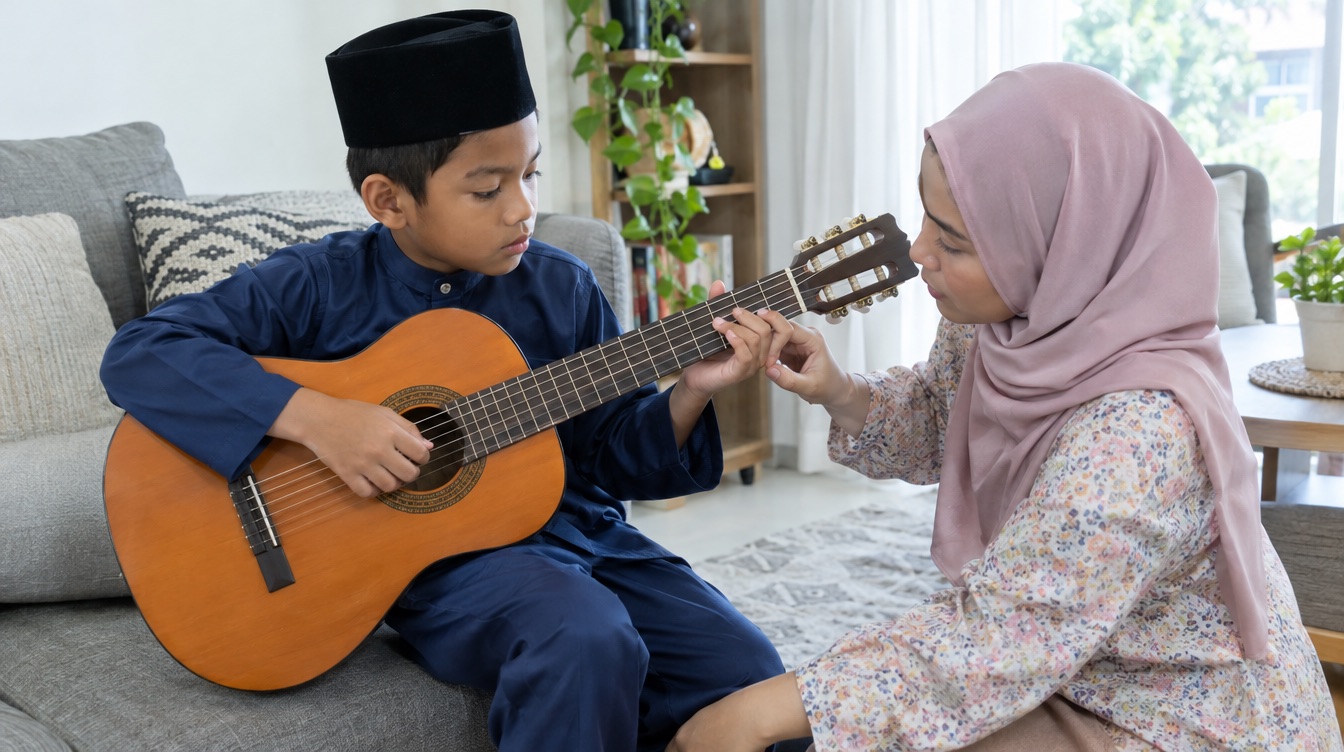
Guitar lessons in Singapore are a weekly session on classical, acoustic or electric guitar, with a private tutor or at a music school. The guitar is a practical first instrument in an HDB flat: it stores in a case, and an electric guitar can be practised on headphones. The teacher still has to match the size of the guitar to the child’s hands.
- Usual start
- Often 6 to 8, on a half-size or three-quarter guitar
- Three instruments
- Nylon-string classical, steel-string acoustic, or electric
- ABRSM
- Practical grades from Grade 1 to Grade 8. Initial Grade is for piano and strings
- Grades 6 to 8
- Need Grade 5 theory, Practical Musicianship, or a listed alternative first
- Jazz grades
- ABRSM jazz practicals are offered in Singapore
- Home lessons
- Tutor Circle matches a guitar tutor. Parents pay the tutor
Which guitar to buy first
Buy the guitar that matches the music, in a size the student can play this month. A cheap full-size guitar with a high action makes every chord hurt, and children stop.
| Goal | Instrument | In an HDB flat |
|---|---|---|
| ABRSM or Trinity classical grades | Nylon-string classical, correct size | Quiet enough at a reasonable hour. Nylon is softer than steel |
| Songs, camps, worship, strumming | Steel-string acoustic, correct size | Lighter strumming, or a practice mute |
| Rock, pop, blues, jazz lines | Electric guitar and a small amp | Headphone output. The amp stays off after 9pm |
| Not sure yet | A playable classical in the right size | One instrument done well beats three neglected ones |
Sizes are usually 1/2, 3/4 and full. A child whose left hand cannot reach the third fret cleanly needs a smaller guitar, even if a sibling’s full-size instrument is already in the cupboard. Ask the teacher to check the action. High strings are a setup problem, not a talent problem.
A home tutor or a music school
A guitar tutor can teach in the living room. The student keeps the same chair, the same guitar and the same notebook. A music school adds a room, a term plan and, at the stronger schools, a performance class. NAFA’s School of Young Talents is the campus route for children who want graded training and stage time across music. [4] The wider choice, including the School of the Arts for teenagers, is on the music school page.
- Home lesson: one student, one teacher, the guitar they will practise on.
- Online lesson: works once the student can angle a camera at the fretboard. A first month is easier in the room.
- Group class: useful for strumming together. Weak for fixing one left-hand habit.
- School band or guitar ensemble: the reason many teenagers keep playing after grades feel abstract.
Piano is the other common first instrument, and it has its own grade ladder from Initial Grade. If the household is choosing between them, read the piano guide beside this one. The weekly practice habit is the same. The furniture is not.
ABRSM, Trinity and jazz guitar
ABRSM practical grades for guitar run from Grade 1 to Grade 8, alongside a wide list of other instruments and singing. Initial Grade, the step before Grade 1, is published for piano and bowed strings. [1] A guitar student who wants a certificate starts at Grade 1 when the pieces are ready, not on a fixed birthday.
The Grade 5 theory rule still applies at the top. Practical Grades 6, 7 and 8 need a pass at Grade 5 or above in Music Theory, Practical Musicianship, or a listed Jazz Practical Grade, before the booking. [1] Start theory early if exams are the plan.
Students who want jazz have a local option. ABRSM jazz practical grades are offered in Singapore. [2] Trinity is the other board guitar teachers enter. [3] Stay on one syllabus for a grade. Mixing books from two boards in the same term confuses fingerings and exam criteria.
When to skip the exam
A teenager who wants ten songs for a camp, or an adult learning chords for worship, may never need a grade. Say that in the first message to the tutor. A classical grade book is the wrong course for that goal, and it is a common reason students quit.
Practice in the first months
Fingertips toughen up by playing a little every day. The targets below are what teachers set. They are not printed in the ABRSM regulations.
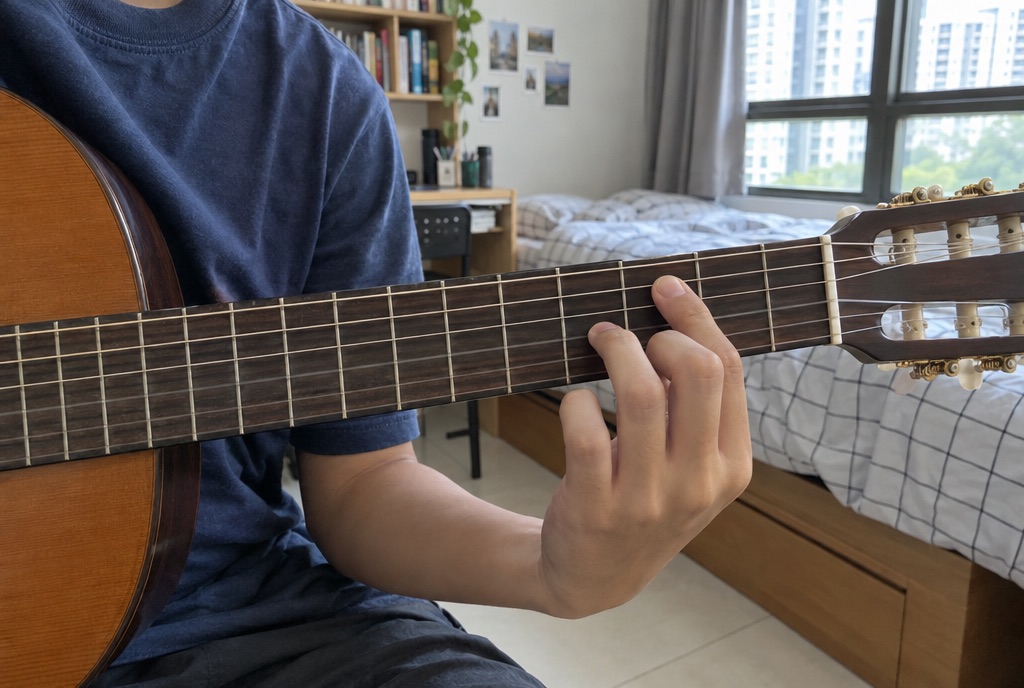
Daily guitar practice targets teachers commonly set
Practise the chord change, not only the song. Twenty clean changes between two chords beat one messy play-through.
Guitar lessons by age
| Student | First term | Watch for |
|---|---|---|
| Age 6 to 8 | Correct size, open strings, one-finger notes, a short song | A guitar that is too big |
| Upper primary | Chords or a Grade 1 book, depending on the goal | Practice that only happens on lesson day |
| Teenager | Songs they chose, or the next grade, plus ensemble if they want a band | Comparing themselves with a YouTube player |
| Adult | Four chords and one song they like, with a pain-free left hand | A full-size guitar with a high action |
How to request a guitar tutor
Send the age, the style, the guitar you already own, and whether the lesson is at home or online. Tutor Circle usually sends profiles within 24 hours. Coordinators are on WhatsApp at +65 9628 4702 daily from 9am to 8pm. Parents pay the tutor for lessons conducted.
Questions parents ask
What age can a child start guitar lessons in Singapore?
Many teachers start children around 6 to 8, when the hand can hold a smaller guitar and the child can sit through a 30-minute lesson. A half-size or three-quarter guitar matters more than the birthday. A full-size classical guitar is uncomfortable for a small child and teaches a stretched left hand.
Classical, acoustic or electric guitar?
Classical guitar uses nylon strings and is the instrument ABRSM practical grades are built around. Steel-string acoustic is the usual choice for songs and strumming. Electric guitar needs an amplifier, or a headphone amp in an HDB flat. Pick the music the student wants to play, then buy that guitar. Switching later is possible. Starting on the wrong string type makes the first month harder than it needs to be.
Are there ABRSM exams for guitar?
Yes. ABRSM offers practical grades for a wide range of instruments, including guitar, from Grade 1 to Grade 8. Initial Grade is published for piano and bowed strings, so guitar students normally start at Grade 1. Grades 6, 7 and 8 still require a pass at Grade 5 or above in Music Theory, Practical Musicianship, or a listed alternative, before booking.
Is guitar easier than piano for a child in an HDB flat?
It is easier to store and easier to silence. A guitar case fits in a bedroom, and an electric guitar through headphones is quiet. The left-hand work is still slow at the start. Finger pain in the first fortnight is normal. Bleeding skin or a numb hand is a reason to stop and tell the teacher.
How often should a beginner practise?
Ten to fifteen focused minutes a day is enough in the first month. The chart on this page is a teaching target, not an exam rule. Daily short practice builds the fingertip skin and the chord changes. A two-hour session on Sunday does not.
Can I get a guitar tutor at home?
Yes. Tutor Circle matches guitar tutors for home or online lessons. Tell us the student’s age, the style (classical, acoustic songs, or electric), and whether you already own a guitar. WhatsApp +65 9628 4702 or use the request form. Parents pay the tutor. There is no parent agency fee.
Sources
Grade rules below are from ABRSM and Trinity. Guitar sizes and practice minutes are teaching practice, not a board regulation. Fees are agreed with the tutor or the school.
- ABRSM, “Practical Grades.” Practical grades from Grade 1 to Grade 8 cover a wide range of instruments, including guitar, and singing. Initial Grade is listed for piano and bowed strings. Grades 6 to 8 require Grade 5 or above in Music Theory, Practical Musicianship, or a listed Jazz Practical Grade. Accessed 13 October 2026. https://www.abrsm.org/en-gb/practical-grades/about-practical-grades
- ABRSM, “Face-to-face exams.” Jazz practical grades are available in Singapore, among a short list of countries, at ABRSM jazz visits or private visits. Accessed 13 October 2026. https://www.abrsm.org/en-gb/how-to-book/face-to-face-exams
- Trinity College London, music qualifications. Trinity is the other graded board guitar teachers in Singapore use, including classical and contemporary strands. Check the current syllabus before entering a grade. Accessed 13 October 2026. https://www.trinitycollege.com/qualifications/music
- Nanyang Academy of Fine Arts, School of Young Talents. NAFA’s junior music department trains children toward graded exams and performance. Guitar students who want a campus route should read the current junior music courses, which are organised by instrument. Accessed 13 October 2026. https://www.nafa.edu.sg/schools/school-of-young-talents